When the rainy season hits, the challenge of maintaining a stylish, fresh home doubles. Between muddy paws, dripping coats, and that persistent “wet dog” smell, your floors and furniture are under constant assault.
The key to surviving the season without ruining your decor is a combination of sacrificial layers and humidity management. Here is how to shield your home from the elements while keeping your aesthetic intact.
Start at the Door: Contain the Mess Early
Most rainy-season damage starts at the entryway. If you stop dirt and moisture there, the rest of your home stays cleaner by default.
Create a simple “pet landing zone” near your door:
- Place an absorbent mat or old towel right inside the entrance
- Keep a second towel nearby for quick paw wipes
- If possible, encourage your pet to pause here before roaming the house
This small pause—just 20–30 seconds—can save your floors and rugs from muddy trails.
Protect Floors With Washable Layers
During rainy season, your floors need a temporary shield.
Washable rugs and runners are your best friends, especially in:
- Hallways
- Living room walkways
- Near pet beds or feeding areas
Choose rugs that:
- Can be machine-washed
- Have non-slip backing
- Dry quickly
This way, you’re protecting the floor underneath without stressing over every spill or paw print.
Think of these as “sacrificial layers” for the season.
Be Strategic With Furniture Protection
You don’t need to wrap your entire living room in plastic. Focus on the furniture your pets use most.
Protect high-contact areas like:
- Sofa seats and armrests
- Pet-favorite chairs
- Window-side cushions
Simple solutions include:
- Washable throws or blankets
- Furniture covers designed for easy removal
- Designating one “pet-friendly” seating area
This keeps fur, moisture, and dirt from soaking into fabric while still keeping your home comfortable and stylish.
Manage Wet Paws Before They Dry
Wet paws aren’t just muddy—they can leave faint water marks that damage floors over time, especially wood and laminate.
Make quick drying part of your routine:
- Keep microfiber towels near entrances
- Gently wipe paws and belly after outdoor trips
- Pay attention to paws after rain, even if your pet “looks clean”
This habit takes seconds but prevents:
- Floor stains
- Slippery surfaces
- Lingering damp smells
Rotate and Elevate Pet Beds
Pet beds absorb moisture easily during rainy season—especially if your pet comes in damp and heads straight for nap time.
To reduce damage:
- Choose beds with removable, washable covers
- Elevate beds slightly off the floor if possible
- Rotate covers so one can dry while another is in use
A damp pet bed can quietly transfer moisture to your floors and nearby furniture, so keeping them dry matters more than most people realize.
Increase Cleaning Frequency (But Keep It Light)
Rainy season doesn’t require deeper cleaning—just more frequent light cleaning.
Instead of one big weekly clean, try:
- Quick daily sweeps or vacuum passes
- Spot-cleaning muddy areas immediately
- Shaking out rugs every few days
This prevents dirt from settling in and becoming harder to remove later.
Control Moisture and Odors
Rain + pets can sometimes mean a “wet dog” smell that lingers.
To keep things fresh:
- Open windows when weather allows
- Use fans or dehumidifiers in damp rooms
- Wash pet blankets and towels more frequently
Dry air is your ally. The faster moisture leaves your home, the less damage it causes.
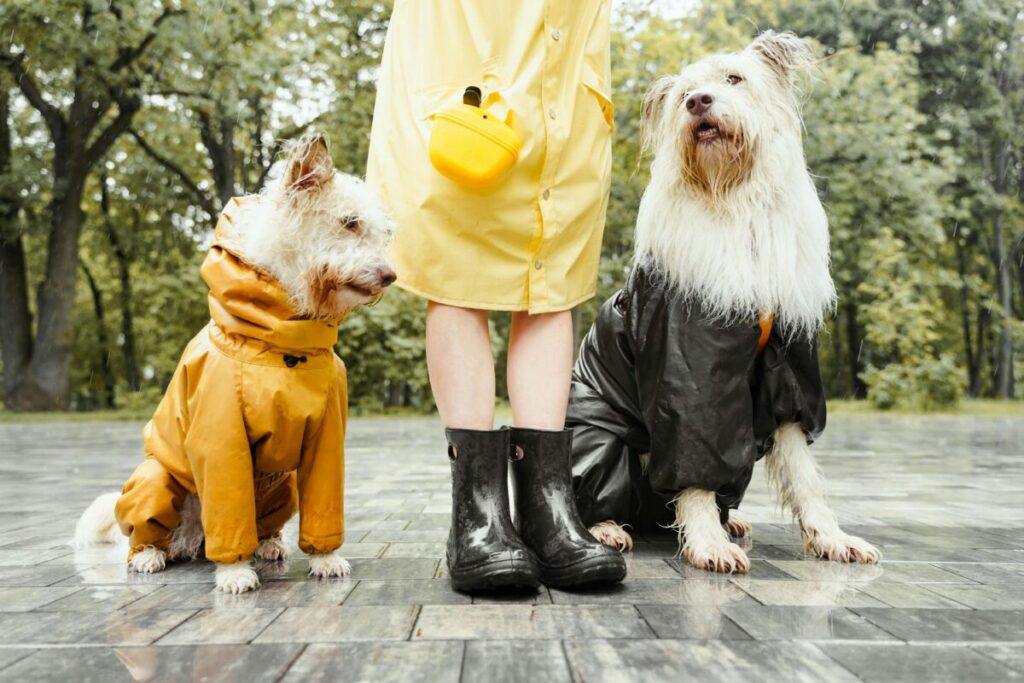
Consider Pet Raincoats (Yes, They Actually Help)
It might sound a little extra at first, but pet raincoats can make a real difference during rainy season—especially for dogs that go outside multiple times a day.
A lightweight raincoat helps by:
- Reducing how much water soaks into your pet’s fur
- Keeping mud from splashing onto the chest and belly
- Cutting down drying time once they’re back indoors
Less wet fur means:
- Fewer water marks on floors
- Less dampness on furniture
- Less of that lingering “wet pet” smell
For dogs, look for raincoats that are:
- Lightweight and breathable
- Easy to put on and remove
- Designed to cover the back and chest without restricting movement
For cats (if they tolerate outdoor walks or supervised yard time), raincoats are more niche—but some cats do accept them if introduced slowly and used only when necessary.
Important note:
Raincoats aren’t about fashion. They’re simply another tool to reduce moisture entering your home during wet weather. If your pet hates wearing one, it’s better to skip it than force it.
Final Pro-Tip: The “Dry Before You Lie” Rule
Establish a house rule: the pet does not get “couch privileges” until they are 100% dry. Use a pet-safe blow dryer on a low, cool setting to speed up the process if you’re in a hurry. It saves your furniture from absorbing that deep-seated dampness that is so hard to clean later.